

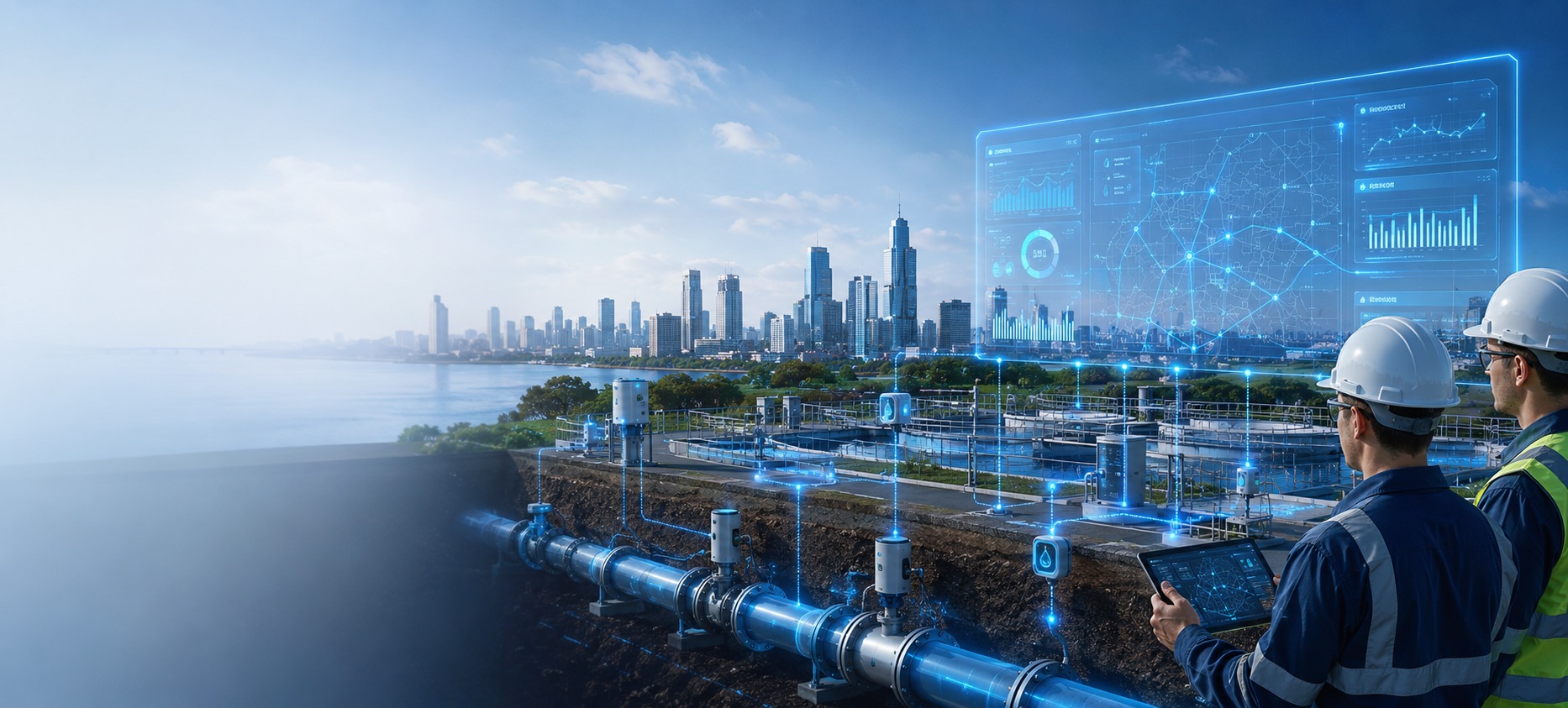
Smart Water Networks: How Digital Transformation is Reducing Water Loss and Improving Utility Performance
Discover how real-time monitoring, telemetry, smart sensors, and predictive analytics are helping water utilities minimize non-revenue water, optimize operations, and deliver more sustainable water services
Water is one of the world's most valuable resources, yet millions of cubic meters are lost every day through leaks, aging infrastructure, and inefficient network management. For municipalities and industrial operators, reducing these losses is no longer just an operational objective—it is a strategic necessity.
The evolution of Smart Water Networks is transforming how utilities manage drinking water and wastewater systems. By combining advanced sensors, telemetry, cloud platforms, and intelligent analytics, operators can move from reactive maintenance to predictive management, reducing costs while improving service reliability.
The Challenge of Aging Water Infrastructure
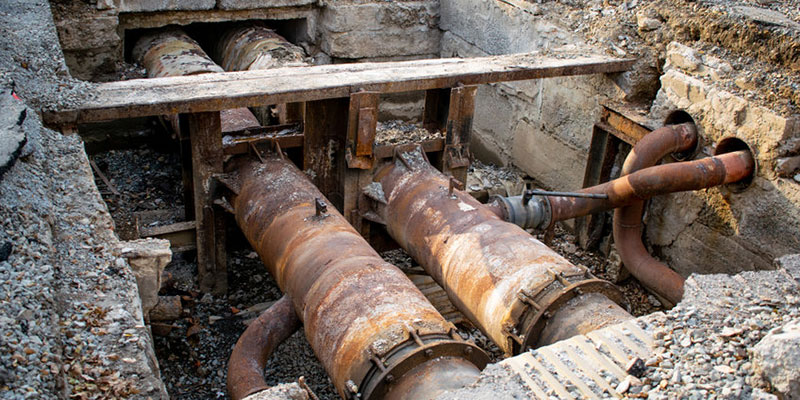
Many water distribution systems were installed decades ago and now operate under increasing demand with deteriorating pipelines. Traditional maintenance strategies often rely on customer complaints or periodic inspections, allowing leaks and failures to remain undetected for extended periods.
The consequences include:
- High levels of Non-Revenue Water (NRW)
- Increased operational costs
- Service interruptions
- Higher energy consumption
- Reduced infrastructure lifespan
Modern utilities require continuous visibility into their networks to respond before small issues become major failures.
Real-Time Monitoring Makes the Difference
A modern smart water network continuously collects operational data from critical assets throughout the system.
Key parameters include:
- Pressure
- Flow
- Water level
- Water quality
- Temperature
- Pump status
- Valve operation
With real-time information, operators can immediately detect abnormal conditions and initiate corrective actions before customers are affected.
Telemetry Enables Smarter Decisions
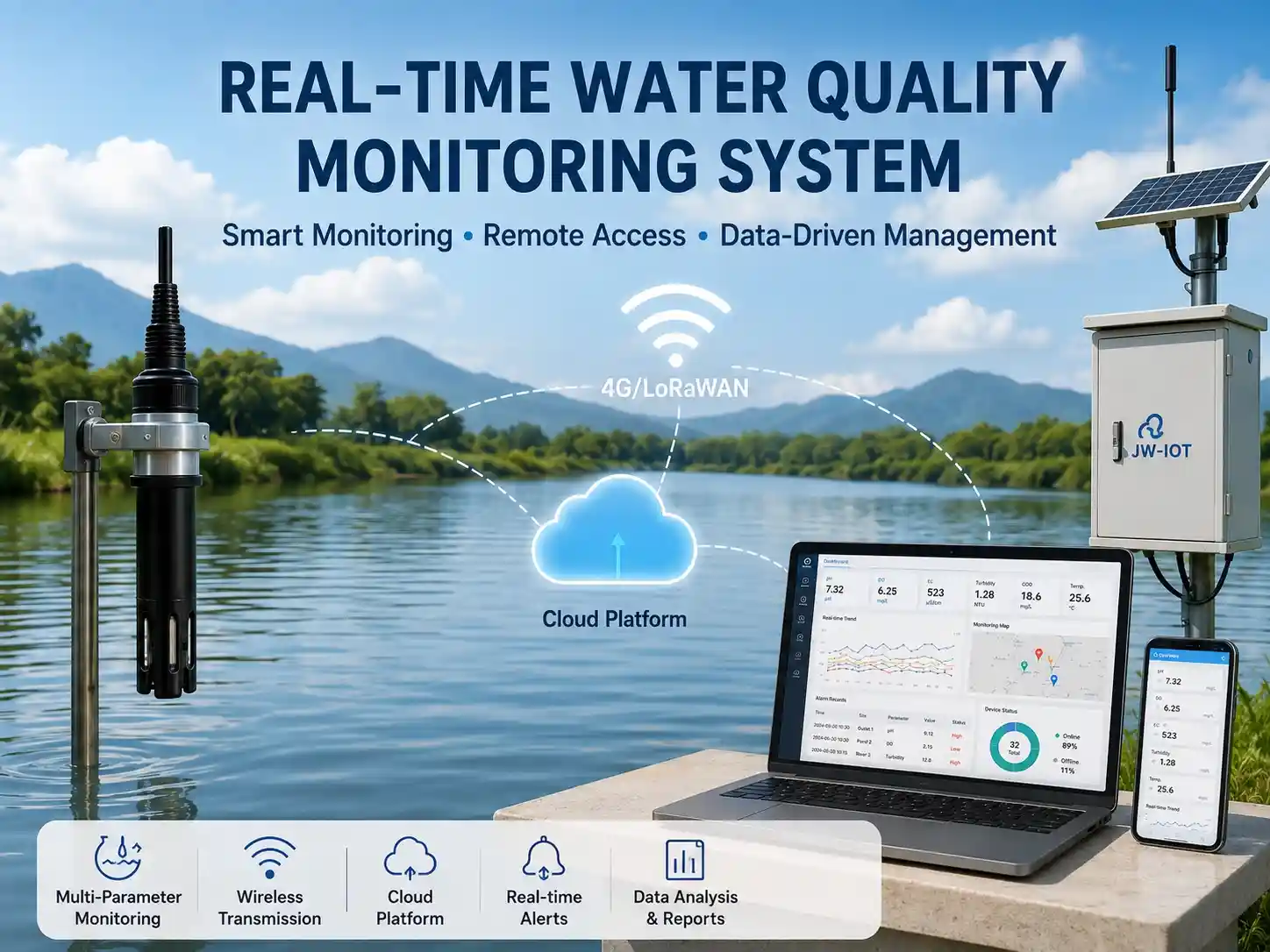
Telemetry systems connect remote field equipment with centralized monitoring platforms, allowing operators to supervise hundreds of assets from a single control center.
Benefits include:
- Remote monitoring 24/7
- Automatic alarms
- Historical trend analysis
- Predictive maintenance
- Reduced field visits
- Faster incident response
This improves operational efficiency while lowering maintenance costs.
Leak Detection Reduces Water Loss
Undetected leaks are among the largest contributors to water loss worldwide.
Today's leak detection technologies combine:
- Acoustic sensors
- Pressure monitoring
- Correlation equipment
- Smart data loggers
- Geographic analysis
These technologies allow maintenance teams to identify hidden leaks long before they become visible, minimizing repair costs and preventing service disruptions.
Water Quality Monitoring Protects Public Health
Continuous monitoring of water quality is becoming increasingly important.
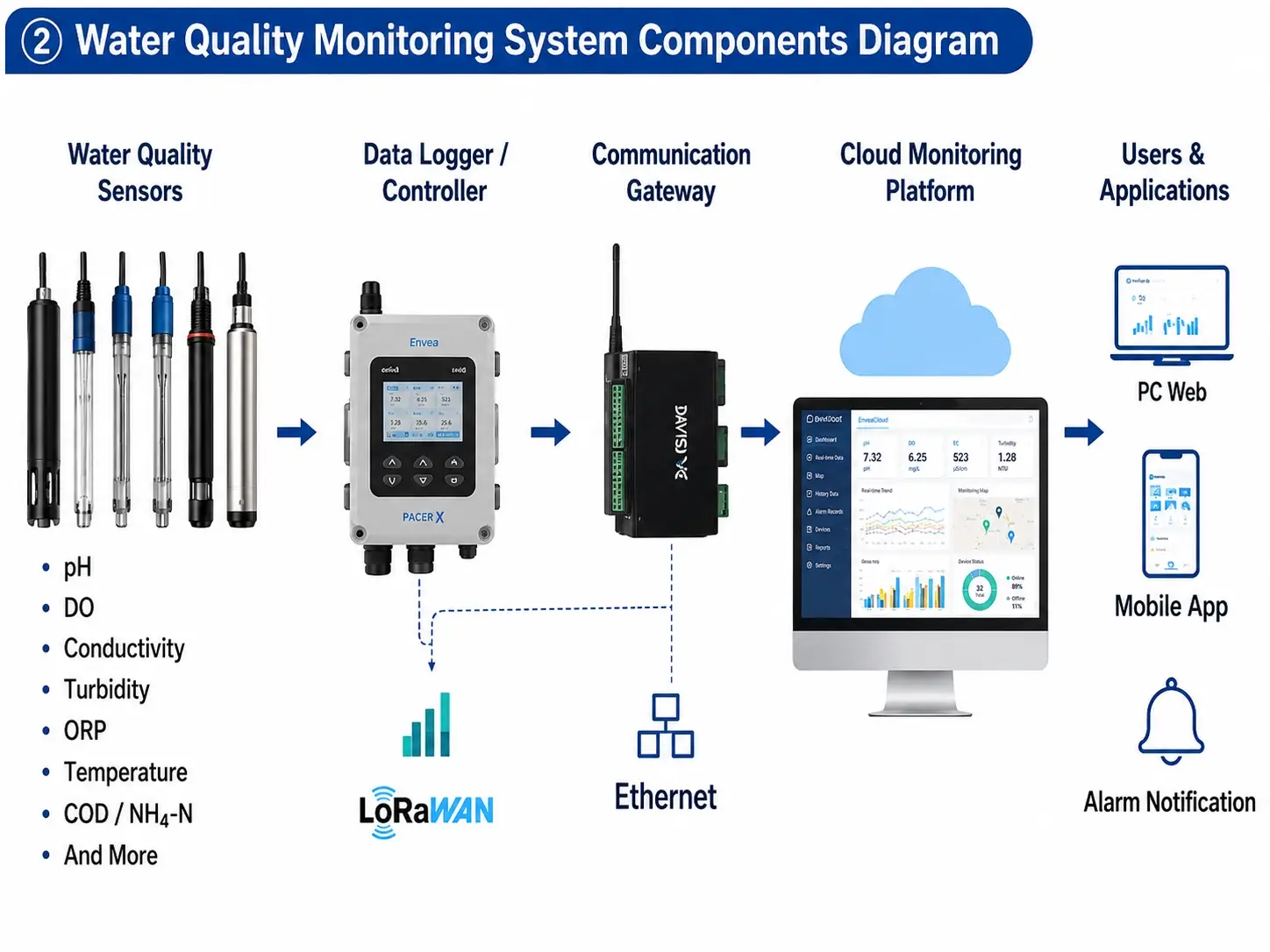
Multiparameter sensors can measure:
- pH
- Conductivity
- Dissolved oxygen
- Turbidity
- Chlorine
- Temperature
When integrated into telemetry platforms, utilities receive immediate alerts if water quality deviates from acceptable limits, enabling rapid corrective actions.
Digital Platforms Turn Data into Action
Collecting data is only the first step.
Modern visualization platforms convert thousands of measurements into dashboards, alarms, historical reports, and performance indicators that support better operational decisions.
Operators can identify trends, optimize maintenance schedules, improve energy efficiency, and prioritize infrastructure investments using objective data instead of assumptions.
The Future Is Predictive
Artificial intelligence and machine learning are beginning to reshape water management by forecasting equipment failures, identifying consumption anomalies, and optimizing network performance before problems occur.
Organizations that adopt these technologies today position themselves to reduce operational costs while increasing resilience against future water challenges.
Building Sustainable Water Infrastructure
Digital transformation is no longer optional for water utilities seeking to improve efficiency and sustainability. By integrating telemetry, smart sensors, leak detection, water quality monitoring, and advanced analytics, utilities gain complete visibility into their infrastructure and can make faster, data-driven decisions.
At Marfel, we provide state-of-the-art technologies that help municipalities, utilities, and industrial organizations modernize their water infrastructure through intelligent monitoring, automation, leak detection, pipeline rehabilitation, and advanced measurement solutions.
Together, we can build more resilient and sustainable water networks for future generations.